
Quick answer
Check the trash first, then call your dentist. If your aligner is missing, put your previous set back in to keep your teeth supported and contact Dental Park in Dedham at (781) 326-6260. Your dentist will tell you whether to continue with your previous set, advance to another tray, or arrange a replacement.
Key takeaways
- Wrapping aligners in a napkin is the number one way patients lose their trays, so always use your case instead.
- If an aligner disappears, put your previous set back in immediately to keep your teeth from drifting.
- Call your dentist quickly so your treatment timeline of 3 to 10 months stays on track.
- Wear your aligners nearly all day, removing them only to brush and floss.
- Replacement trays are usually simple to arrange, so a lost aligner rarely means starting over.
Threw Your Aligners Away in a Napkin? Here's What to Do First
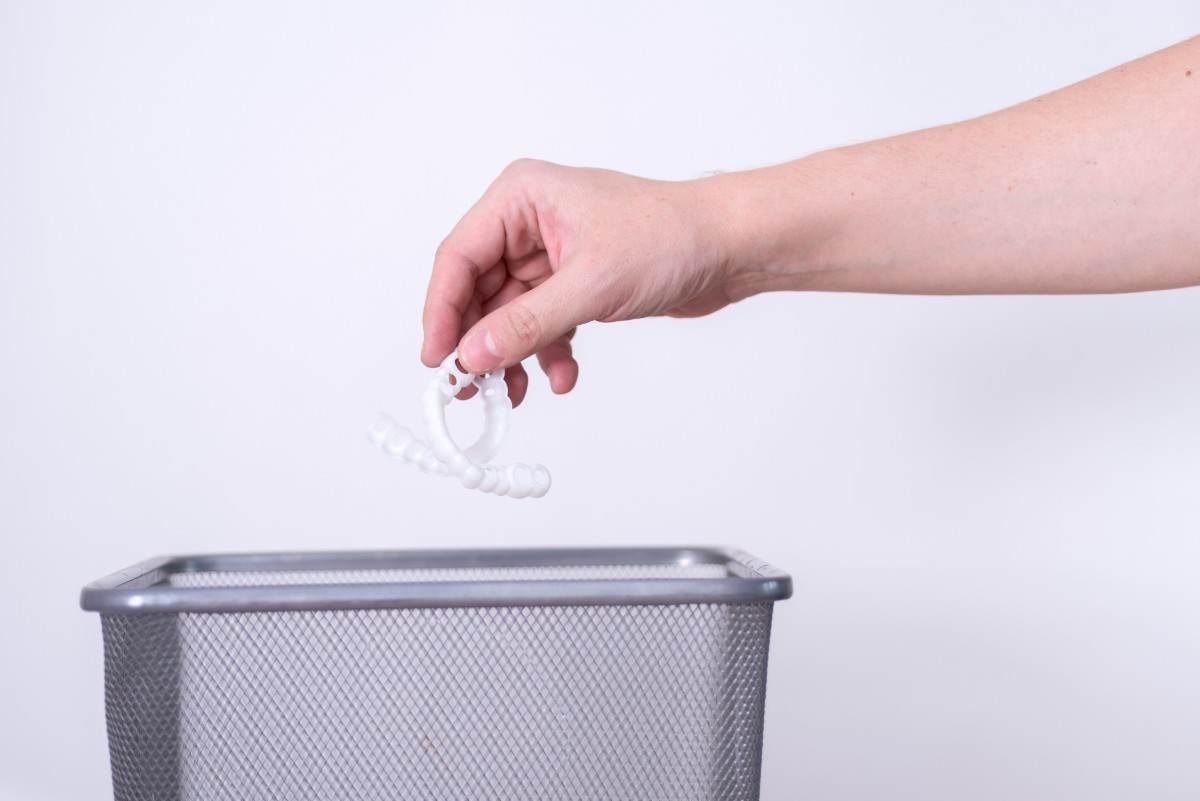
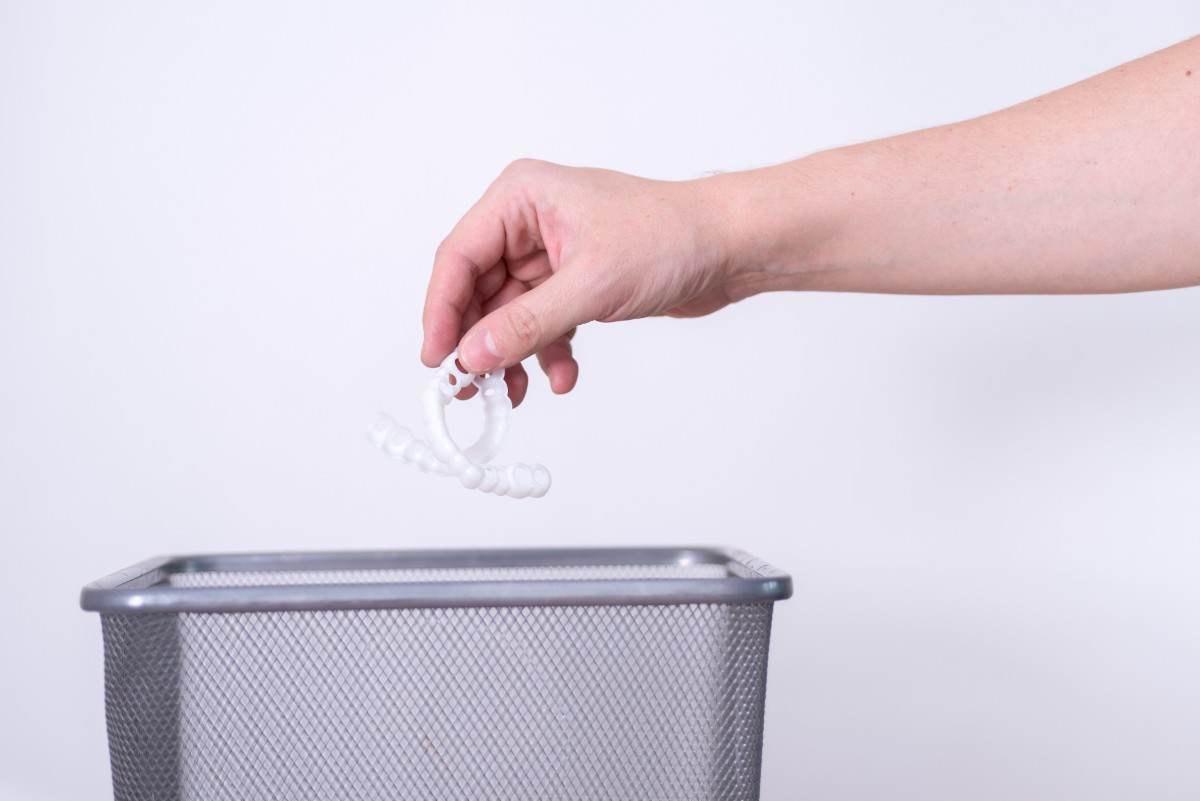
Check the trash first, then call your dentist. That is the short version, and if you act within a few minutes, you can usually rescue the situation entirely. The moment you realize your aligner has vanished, trace your steps back to the last napkin, the last table, or the last bathroom counter where you set it down.
The immediate answer: check the trash, then call your dentist
Most lost aligners are hiding in a crumpled napkin, a lunch tray, or a kitchen garbage can. Before you assume the worst, dig gently through the trash. Clear aligners are nearly invisible against white paper, which is exactly why they slip away unnoticed. If you recover the tray, rinse it well and move on. If it is truly gone, do not spiral. Reach for your previous set and call Dental Park in Dedham at (781) 326-6260.
Why aligners wrapped in napkins almost always end up lost
A napkin feels convenient, but it is a trap. The folded paper looks like ordinary trash to anyone clearing a table, including you an hour later. Server, family member, or your own tired hand, someone eventually sweeps that napkin into the bin. This is the single most common way patients lose their trays, which is why your official case exists.
Don't panic, your treatment can usually get back on track
Losing an aligner is annoying, not catastrophic. Treatment with clear aligners is flexible, and a single missing tray rarely undoes your progress. With a quick phone call and the right backup, you can keep your smile moving in the right direction.
"The patients who recover fastest are the ones who keep their previous set nearby and call us the same day. A lost tray is a small bump, not a restart, as long as you keep your teeth supported until we reach you."
Step-by-Step: What to Do the Moment You Lose an Aligner
Follow a calm, ordered response and you will protect both your progress and your wallet. Here is the exact sequence to work through the instant a tray goes missing.
Search the trash, the napkin, and every surface you touched. If you find it, rinse it in lukewarm water and clean it gently before placing it back.
Put your previous aligner back in right away. It still fits and will hold your teeth steady. Only move to your next set if your dentist tells you to.
Phone the office at (781) 326-6260 and explain what happened. We will tell you whether to advance, repeat, or order a replacement.
Do not leave your mouth without a tray for long. Wearing the previous set prevents your teeth from drifting before we speak.
- Your official aligner case for every removal
- Your previous set as an immediate backup
- Lukewarm water and gentle cleaning
- A quick phone call to your dentist
- Napkins, paper towels, or tissues as a holder
- Hot water, which can warp the plastic
- Skipping ahead to a new set without approval
- Going hours with no tray in place
Will a Lost Aligner Set Back My Invisalign Treatment?
Usually not, as long as you keep a tray in place and call promptly. Teeth move gradually, and a short gap handled correctly rarely changes your final result.
How teeth can shift when aligners aren't worn
Teeth are held in position by the steady, gentle pressure of each tray. When nothing is guiding them, they can begin to drift back toward their old spots within a day or two. That is why your previous set matters so much: it keeps the pressure going until your replacement arrives.
The near 24-hour wear rule and why consistency matters
Aligners do their job when you wear them almost all day, taking them out only to brush and floss. Consistency is the quiet hero of this treatment. If you want the full picture, read our guide on how long you should wear Invisalign each day. The American Association of Orthodontists notes that aligners rely on faithful daily wear to deliver results, which you can read more about in their comparison of braces and clear aligners.
Average treatment timelines of 3 to 10 months
Most patients complete treatment in roughly 3 to 10 months and often notice visible changes within that same window. A single lost tray, managed well, usually does not stretch that timeline in any meaningful way.
How Invisalign Works and Why Each Tray Matters
Invisalign straightens teeth using a series of clear, custom trays, and each one builds on the last. Skip or lose one and you interrupt a carefully planned sequence, which is why every tray counts.
Clear, custom aligners made from a 3D scan
Your trays are made from a precise 3D scan of your mouth, so each set fits only your teeth at that exact stage. One tray gently guides your teeth, then the next picks up where it left off. You can explore the full process in our overview of how Invisalign works to fix your teeth.
Removable for brushing and flossing to protect your teeth
One of the nicest parts of clear aligners is that you can take them out to brush and floss. That simple habit helps lower the risk of cavities, gum problems, and bone loss, because you can clean every surface of your teeth easily. Outside of oral hygiene, keep your aligners in and let them work.
Who Invisalign is right for: kids, teens, adults, and seniors
Clear aligners suit almost everyone, from kids and teens to adults and seniors. There is no need for surgical treatment, and they handle a wide range of needs, including Invisalign for crowded teeth and bite issues. If you are curious about the mechanics, our page on how invisible braces and Invisalign work breaks it down clearly.
Preventing the Napkin Mistake: Everyday Aligner Habits
The best fix for a lost aligner is never losing one, and a few small habits make that almost automatic. Build these into your routine and the napkin trap loses its power.
Always use your official aligner case, never a napkin
Your case is bright, sturdy, and impossible to mistake for garbage. Keep one in your bag, one at work, and one in the car. The rule is simple: if a tray is not in your mouth, it belongs in the case and nowhere else.
Cleaning your aligners the right way
Rinse your trays with lukewarm water and brush them gently. Avoid hot water and harsh scrubbing, which can damage or cloud the plastic. For comfortable seating of each new tray, some patients like using Invisalign chewies and munchies, and you can find helpful options among our recommended dental care products.
Where to store trays at home, work, and restaurants
Pick one predictable home for your case in each setting. On the bathroom counter in a set spot at home, in a desk drawer at work, and in your bag when you are out. Predictable storage means you never have to wonder where your tray went.
Keeping your previous set as a backup
Never throw away your previous aligners. They are your emergency safety net. If a current tray disappears, the previous set keeps your teeth supported until we can help, turning a stressful moment into a minor hiccup.
Replacement Aligners and Microplastic Questions Patients Ask
Replacement trays are usually straightforward to arrange, and clear aligners are considered safe for everyday wear. Here are the questions patients ask us most.
How replacement trays are handled and what they may cost
When a tray is lost, we review where you are in your plan and decide whether to reorder that specific tray or simply advance you to the next one. Cost varies by situation, so the fastest way to get a clear answer is to call us. You can also learn about the cost of Invisalign treatment on our site.
Are clear aligners safe? What the research says
Clear aligners are widely used and well studied. Research reviewing the materials used in aligners has found them suitable for routine wear, as discussed in this scoping review on clear aligner materials. As with any health product, your dentist will guide you on proper use and care so you get the safest, best outcome.
Proper cleaning to avoid staining and damage
Gentle cleaning keeps your trays clear and comfortable. Research on staining shows that certain cleaning habits protect aligners better than others, as noted in this study on aligner staining and cleaning methods. Stick with lukewarm water, a soft brush, and your case, and your trays will stay fresh and clear.
Ready to take the next step? You can schedule a visit online or call us at (781) 326-6260.
Meet Dr. Yaerin Lee, a Diamond Invisalign Provider
Dr. Yaerin Lee brings a well-rounded academic foundation to her work in dentistry. She began her studies in the sciences, earning a Bachelor of Arts in Biology from Case Western Reserve University in Cleveland, Ohio, before pursuing her dental education at NYU College of Dentistry, where she received her Doctor of Dental Surgery (DDS) degree.
Dr. Lee's clinical focus centers on cosmetic, reconstructive, and preventive dentistry. As a Diamond Invisalign Provider, she has demonstrated advanced experience and a strong track record of success with clear aligner treatment. She places a strong emphasis on continuing education, staying current with advancements in the field so she can offer patients the most effective and up-to-date treatment options available. This dedication is reflected in her professional memberships, which include the American Dental Association, the Academy of General Dentistry, and the American Academy of Cosmetic Dentistry.
Outside the practice, Dr. Lee is active in community service, volunteering with a pediatric mobile dental van program that extends care to underserved children in the area.
For Dr. Lee, dentistry is about more than technical skill - it's about helping people feel genuinely confident in their smiles. She approaches every patient relationship with warmth and care, focused on supporting both the health and the beauty of each smile she treats.
Frequently asked questions
First, check the trash and any napkins or surfaces where you may have set the tray down. If you cannot find it, put your previous set back in to keep your teeth supported, then call Dental Park at (781) 326-6260 for guidance on advancing or replacing the tray.
Teeth can begin to drift within a day or two when no tray is guiding them. That is why you should put your previous set back in right away and call your dentist promptly, which usually prevents any meaningful change to your treatment.
Many patients aim to keep their aligners out only briefly for oral hygiene so the trays stay in nearly all day. The best approach is simple: wear your aligners almost 24 hours a day, removing them only to brush and floss, then put them right back in.
Clear aligners are widely used and studied, and reviews of aligner materials support their suitability for everyday wear. If you have concerns, talk with Dr. Yaerin Lee, who can explain how to use and care for your trays safely.
Yes. Your previous set is your built in backup. Wearing it keeps your teeth from drifting until your dentist decides whether to reorder the lost tray or move you forward. This is exactly why you should never discard your old aligners.
The cost depends on your situation and where you are in your plan. Sometimes we advance you to the next tray; other times, we reorder the lost one. Call our Dedham office at (781) 326-6260 for a clear answer specific to you.
For directions, use this helpful Google Maps link or get step-by-step navigation via Get Directions.
Remember: Keep your previous set nearby, always store trays in your case, and call us the same day you lose an aligner.
Disclaimer: This article is for general information only and does not replace personal advice from your dentist about your specific treatment.